%201.svg)



How Dallas Weather Affects Sinus Problems
Dallas weather can change quickly. One day it is hot and dry, the next it can be humid, windy, or stormy. These shifts are a big reason many people notice sinus symptoms that come and go throughout the year. Dallas Breathe Free Sinus & Allergy Center often sees patients who are trying to figure out whether their symptoms are from weather, allergies, or something deeper that needs medical attention.
Your sinuses are air-filled spaces that help filter and humidify the air you breathe. When the air around you changes, your sinuses react. That reaction can show up as pressure, congestion, or headaches.
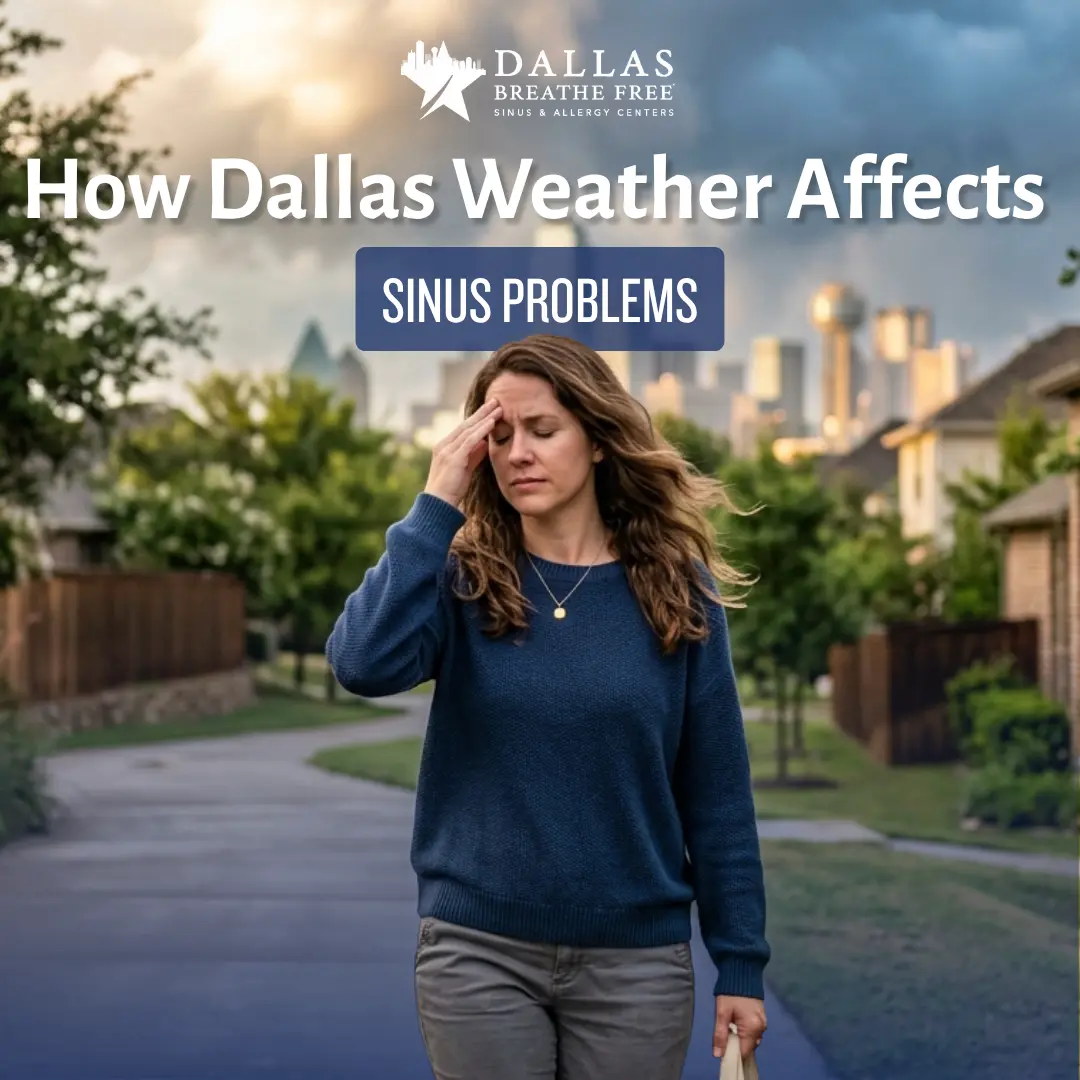
Hot and Dry Weather Can Irritate the Nose
Dallas summers are known for high heat and dry air. This type of weather can pull moisture from the nose and sinuses.
When this happens:
- The nasal lining can become dry and irritated
- Mucus may become thick and harder to move
- You may feel blocked or congested
Thick mucus does not drain well, which can lead to pressure in the face, especially around the cheeks and forehead. Even if you are not sick, your nose can still feel stuffy because of dryness alone.
Humidity Can Make Congestion Feel Worse
Dallas also has periods of high humidity. While moisture in the air can help prevent dryness, too much humidity can create other issues.
High humidity can:
- Increase swelling inside the nasal passages in some individuals
- increase nasal drainage or congestion
- Worsen postnasal drip
Some people feel like they are always “drained” or congested during humid months. This is often due to inflammation in the nasal lining reacting to moisture changes.
Storms and Barometric Pressure Changes
Dallas is known for sudden weather changes, especially storms. Before and during storms, barometric pressure can drop quickly.
This pressure change can affect your sinuses because:
- Pressure within the sinus cavities is affected, particularly when normal sinus drainage is impaired.
- Swollen nasal passages may block normal drainage
- Pressure builds in the forehead, cheeks, or behind the eyes
This is why some people feel sinus headaches right before rain or thunderstorms. It is not just in their head—the sinuses are reacting to real pressure changes in the air.
Wind and Pollen Can Trigger Symptoms
Windy days in Dallas often carry dust, pollen, and other airborne particles. These can easily enter the nose and trigger inflammation.
Common symptoms include:
- Sneezing
- Runny nose
- Sinus pressure
- Itchy nose or eyes
For people with allergies, these symptoms can be stronger. But even without allergies, constant exposure to dust and pollen can still irritate the nasal lining.
Seasonal Changes in Dallas
Each season in Dallas brings different sinus triggers:
- Spring: High pollen levels often lead to allergy flare-ups
- Summer: Heat and dryness can thicken mucus and cause congestion
- Fall: Ragweed pollen becomes a common trigger
- Winter: Indoor heating can dry out nasal passages
Because of these changes, sinus symptoms may feel unpredictable throughout the year.
Indoor Air Adds to the Problem
Dallas weather also affects indoor air quality. When it is hot or stormy outside, people spend more time indoors with air conditioning or heating systems running.
This can lead to:
- Dry indoor air
- Dust buildup in vents and filters
- Reduced airflow in closed spaces
Indoor air problems can make sinus symptoms last longer, even after you go back inside.
Weather vs. Chronic Sinus Problems
It is normal for weather to cause short-term sinus discomfort. But when symptoms keep returning or do not improve, there may be a deeper issue.
Warning signs include:
- Constant nasal blockage
- Frequent sinus infections
- Facial pain that lasts for weeks
- Ongoing pressure or headaches
- Poor response to over-the-counter treatments
These symptoms may point to chronic sinus inflammation, structural blockage, or untreated allergies.
Choosing an ENT Evaluation
When sinus problems keep coming back, many patients start looking for the right ENT. Choosing the right ENT is important because not all sinus issues are the same. Some are caused by allergies, others by structural problems, and some by a mix of both.
At Dallas Breathe Free Sinus & Allergy Center, the goal is to better understand potential factors contributing to your symptoms and discuss appropriate management options. A thorough ENT evaluation may help distinguish weather-related irritation from underlying sinus conditions.
When to Get Checked
It may be time to get evaluated if:
- Your sinus symptoms happen often throughout the year
- Weather changes always seem to trigger discomfort
- You rely on medications but still feel blocked
- You experience repeated sinus infections
Getting clarity early can prevent symptoms from becoming more persistent over time.
Understanding Weather-Triggered Sinus Symptoms
Dallas Breathe Free Sinus & Allergy Center helps patients understand how Dallas weather affects their sinuses and how to tell the difference between temporary irritation and ongoing sinus conditions. If your symptoms are tied to weather changes, it may be time to look deeper into what is really causing them and whether a targeted treatment plan is needed. Schedule an appointment with us today!