



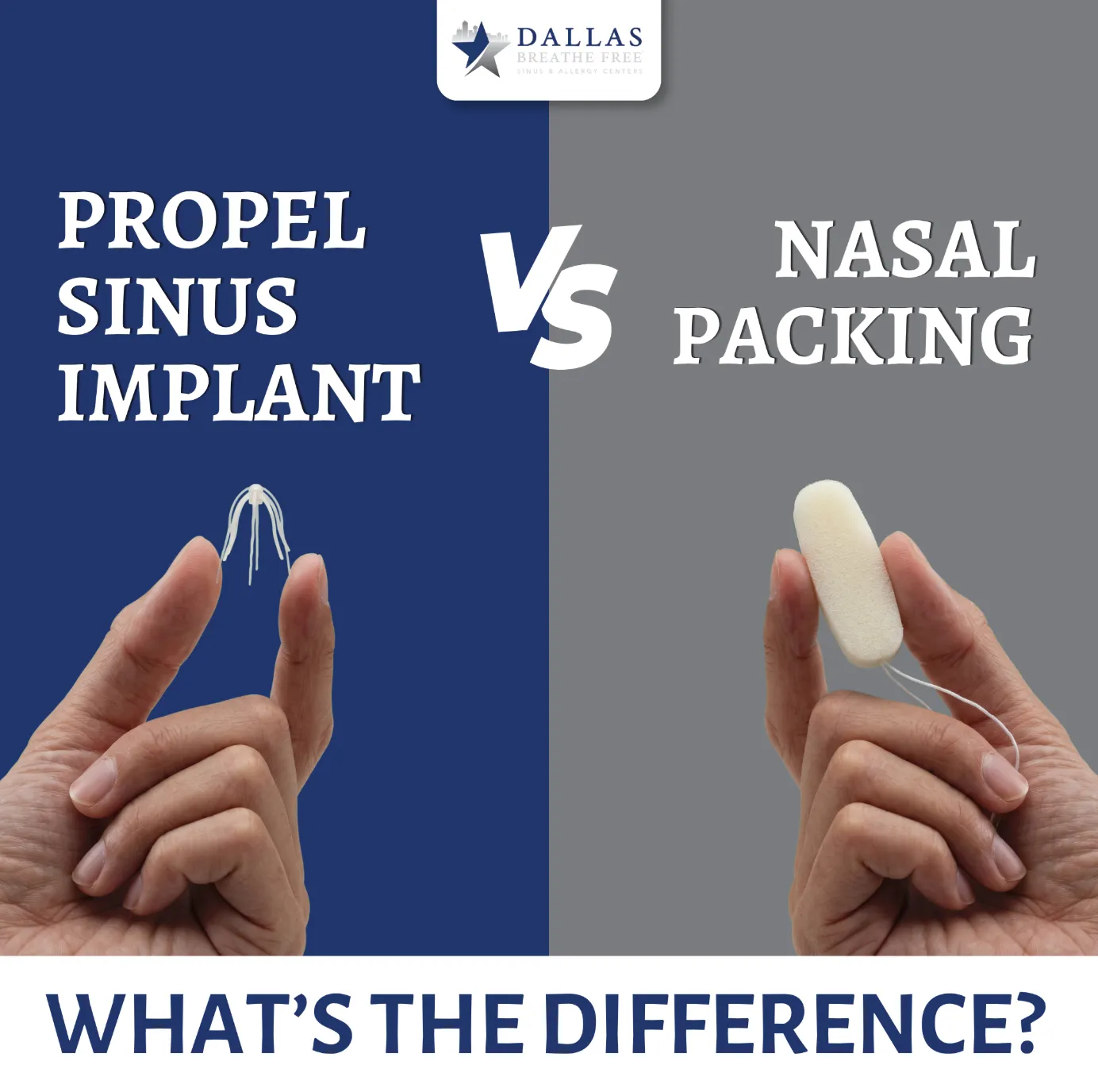
PROPEL Sinus Implant vs. Nasal Packing: What’s the Difference?
After sinus surgery, patients may hear about different materials used to support healing inside the nose. Two terms that can come up are PROPEL sinus implants and nasal packing. Although both may be associated with postoperative care, they serve different purposes and are not interchangeable.
A PROPEL sinus implant is a bioabsorbable device designed to help keep a surgically opened sinus passage clear while delivering a corticosteroid directly to the surrounding tissue. Nasal packing, by comparison, is generally used to control bleeding or support tissues after certain nasal procedures. The type of material used depends on the procedure and the patient's needs.
At Dallas Breathe Free Sinus & Allergy Centers in Fort Worth, patients can discuss their sinus treatment options with an ENT and learn what to expect from different approaches to postoperative care.
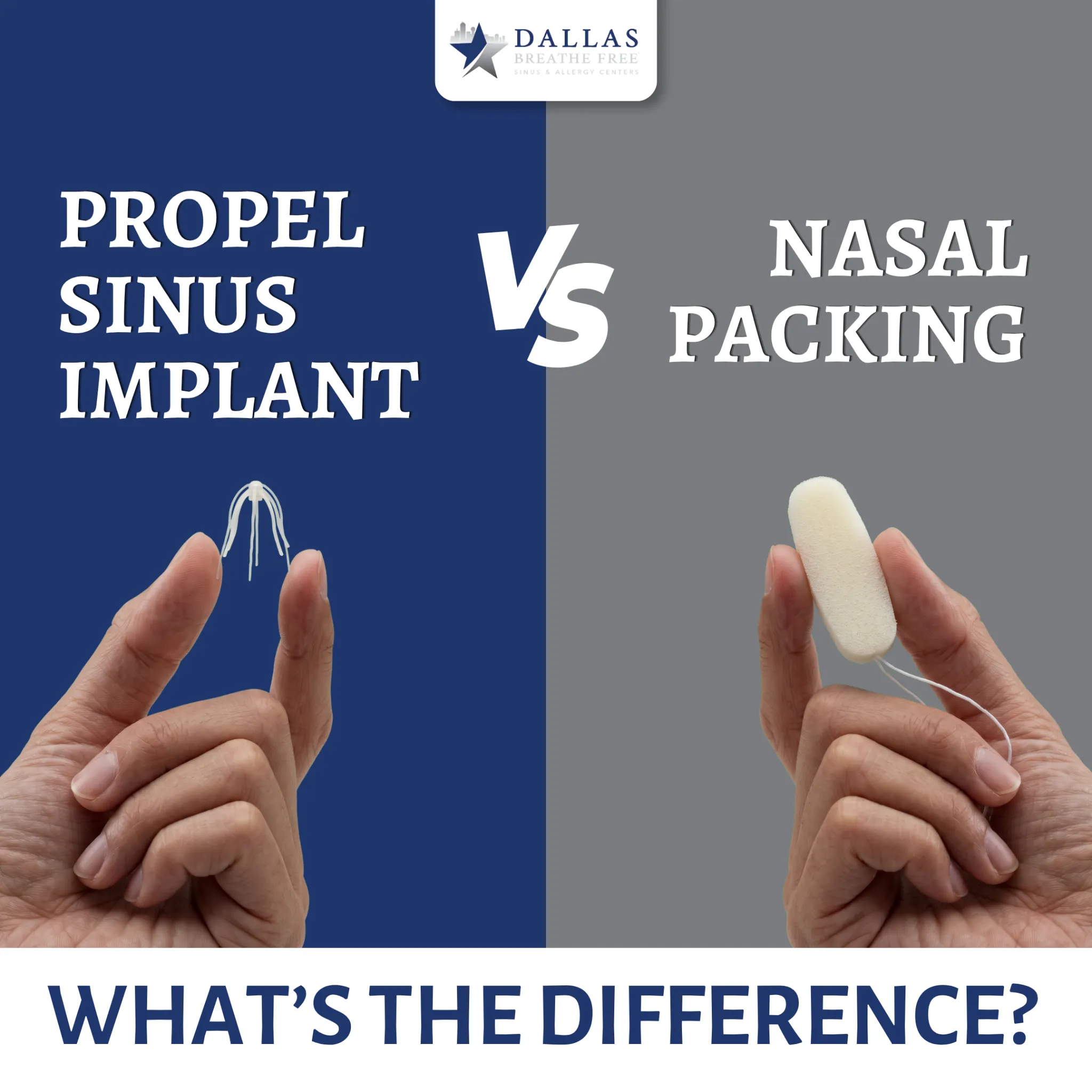
What Is a PROPEL Sinus Implant?
PROPEL is a family of bioabsorbable, corticosteroid-eluting sinus implants used in selected adult patients following endoscopic sinus surgery. Depending on the device model and its indicated placement site, the implant provides temporary support to treated sinus openings while releasing mometasone furoate to surrounding tissue.
After surgery, healing tissue can swell or develop scar tissue that narrows the newly opened sinus passage. PROPEL helps address these concerns by providing structural support while delivering medication to the surgical site.
The implant gradually dissolves as the area heals, so routine removal is generally not required. Different versions are designed for particular sinus locations, and the appropriate device depends on the procedure being performed.
PROPEL is intended for specific uses following sinus surgery in adults. It is not a treatment that every sinus surgery patient needs, and its suitability depends on the surgical findings and the surgeon's judgment.
What Is Nasal Packing Used For?
Nasal packing is material placed inside the nose after certain procedures to help control bleeding, apply pressure, or support tissues during early healing. Depending on the situation, a clinician may use gauze-like material, foam, or an absorbable product.
Packing is commonly associated with procedures involving the nasal cavity, including some nasal surgeries and treatments for nosebleeds. The material and duration of placement vary. Some packing must be removed by a healthcare provider, while absorbable products can break down without routine removal.
Unlike PROPEL, conventional nasal packing is not primarily designed to release a corticosteroid into a sinus surgical site while keeping that opening clear.
It is also important to distinguish nasal packing from other absorbable materials used in sinus surgery. Not every product placed inside the nose serves the same function.
PROPEL vs. Nasal Packing: How Do They Compare?
The main difference comes down to their intended purpose and where they are used.
These products should not be viewed as competing options for the same job. A surgeon selects materials according to the procedure, the surgical site, and the needs of the patient.
Why Does Keeping a Sinus Opening Clear Matter?
The sinuses are air-filled spaces that drain mucus through small openings into the nasal passages. Chronic sinus inflammation can cause the lining to swell, restricting drainage and contributing to congestion, pressure, and recurring symptoms.
When sinus surgery is performed, the surgeon opens affected drainage pathways to improve ventilation and mucus clearance. During recovery, inflammation and scar tissue can narrow those openings again.
A PROPEL implant is designed to help reduce that risk in the specific areas where it is indicated. Its structural support helps maintain the opening, while locally delivered corticosteroid medication helps manage inflammation.
This does not guarantee that scarring or recurrent sinus symptoms will never occur. Rather, the implant is one tool a surgeon may use to support healing after an appropriate procedure.
Does Every Patient Need a PROPEL Implant After Sinus Surgery?
No. The decision depends on the type of surgery, the anatomy involved, the extent of inflammation, and the patient's individual circumstances.
Some patients may recover after sinus surgery without needing an implant. Others may be considered for PROPEL when maintaining a particular surgical opening and controlling local inflammation are important treatment goals.
Your specialist from the right ENT clinic in Dallas can explain whether an implant is appropriate for your procedure, what benefits may be expected, and what risks or alternatives should be considered. The decision should be based on the surgical plan rather than the assumption that an implant is automatically better than other postoperative materials.
Does Nasal Packing Always Have to Be Removed?
Not always. Whether packing needs to be removed depends on the product used and the reason it was placed.
Traditional nonabsorbable packing is generally removed by a healthcare professional at the recommended time. Absorbable packing is designed to break down over time, although follow-up care may still be necessary.
Patients should follow their surgeon's instructions about nasal care, irrigation, activity restrictions, and follow-up appointments. Do not attempt to remove packing or other material yourself unless your healthcare provider has specifically instructed you to do so.
What Should You Ask Your ENT Before Surgery?
If your surgeon mentions PROPEL, nasal packing, or another material for postoperative care, ask how it fits into your treatment plan. Some questions to ask during your first ENT appointment may include:
- What will this material do during my recovery?
- Will it dissolve, or will I need to return for removal?
- How could it affect inflammation, bleeding, or healing?
- Are there alternatives, and what are their limitations?
- What symptoms should prompt me to contact the office after surgery?
These questions can help clarify what to expect and reduce uncertainty about the recovery process.
Before surgery, ask your care team which symptoms are expected during recovery and which require immediate attention. Seek emergency medical care for significant or uncontrolled bleeding, sudden vision changes, or severe headache accompanied by neck stiffness or confusion. Contact your surgical team promptly for worsening pain, fever, or other unexpected symptoms.
Understand Your Sinus Surgery Options Before Moving Forward
Hearing that a device or packing material may be placed inside your nose can raise understandable questions, especially if you are preparing for sinus surgery for the first time. PROPEL and nasal packing have different purposes, and the right choice depends on the procedure and your individual needs.
Contact Dallas Breathe Free Sinus & Allergy Centers in Fort Worth to discuss your sinus treatment options and learn which postoperative approaches may be appropriate for your care.