



Why Can Allergies Make Your Ears Feel Clogged or Muffled?
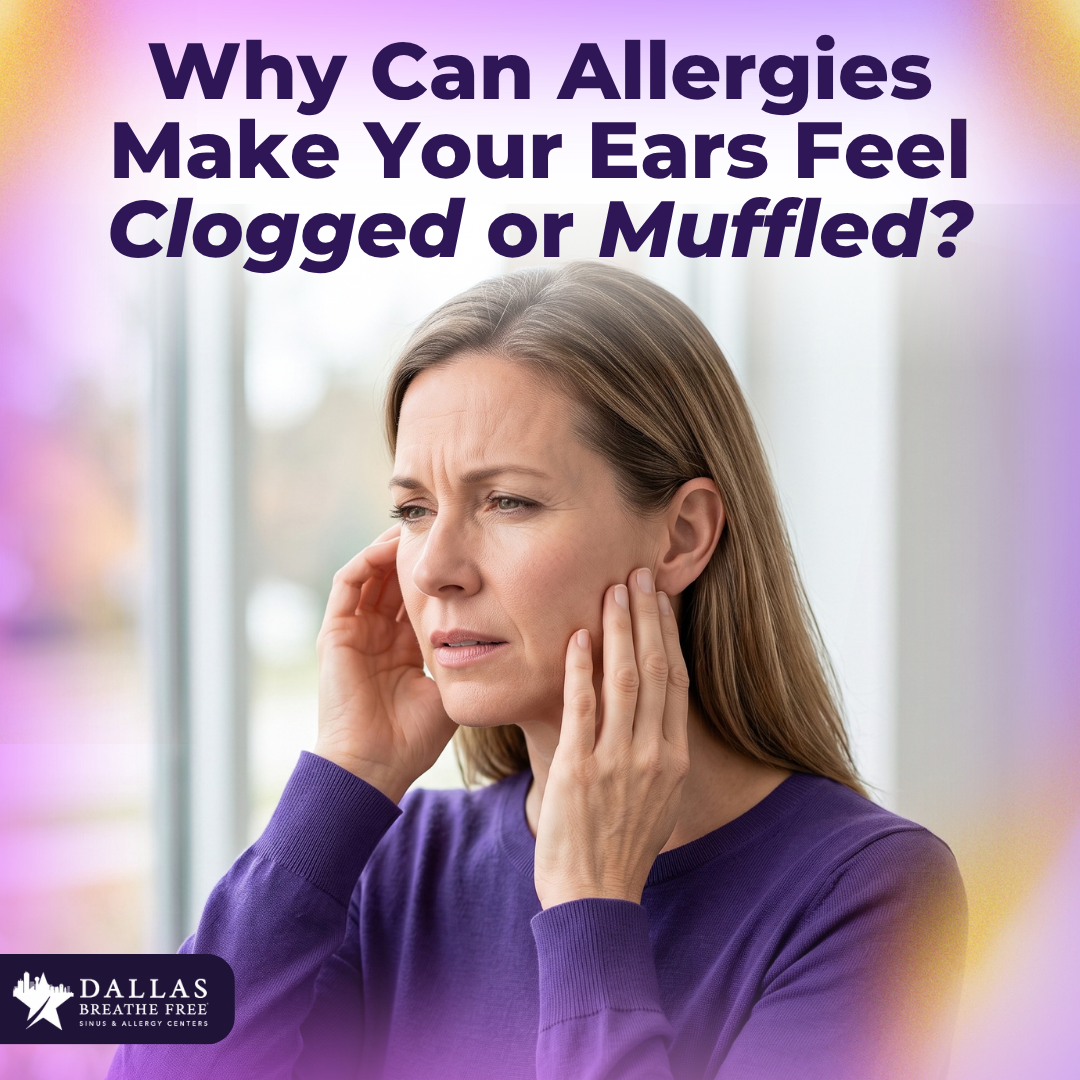
You know the feeling: your ears suddenly seem plugged, sounds are muffled, and you keep swallowing or yawning to try to make them pop. If it happens during an allergy flare-up, the connection may not be obvious. After all, the problem feels like it is in your ears, not your nose.
Allergies can affect the ears indirectly by causing inflammation and swelling around the Eustachian tubes, the small passages that connect the middle ears to the back of the nose and throat. When those tubes cannot open normally, pressure inside the middle ear may become different from the surrounding air pressure, creating a sensation of fullness or muffled hearing.
For patients in Irving and throughout the Dallas-Fort Worth area, Dallas Breathe Free Sinus & Allergy Centers evaluates allergy and ENT symptoms to determine whether nasal inflammation, Eustachian tube dysfunction, or another condition is behind persistent ear pressure.
How Are Your Allergies Connected to Your Ears?
The Eustachian tubes play an important role in keeping pressure balanced inside your middle ears. They normally open when you swallow, yawn, or chew, allowing air to move in and out and helping fluid drain from the middle ear.
The opening of each Eustachian tube is located toward the back of the nose. When allergies trigger inflammation, the tissues inside the nose and around these openings can swell.
That swelling can make it harder for the Eustachian tubes to open properly. Pressure then becomes trapped inside the middle ear, which can make the ear feel blocked even though there is nothing physically stuck inside the ear canal.
What Does Allergy-Related Ear Pressure Feel Like?
The symptoms can be subtle at first. You may simply notice that one ear does not seem to hear as clearly as the other, especially in a noisy room.
Other people describe the sensation as feeling like they are underwater or listening through a wall. You may also experience:
- Fullness or pressure in one or both ears
- Muffled or reduced hearing
- Popping or clicking when swallowing
- A sensation that your ear needs to pop
- Mild discomfort or pressure
- Symptoms that become more noticeable during an allergy flare-up
The symptoms may come and go. Your ear might clear temporarily after swallowing or yawning, only to feel blocked again later.
Why Do Allergies Make the Eustachian Tubes Swell?
During an allergic reaction, your immune system responds to an allergen by releasing chemicals that cause inflammation. The lining of the nose can become swollen and produce more mucus.
That inflammation does not necessarily stay limited to the front of the nose. Swelling near the back of the nasal passages can affect the openings of the Eustachian tubes.
This is one reason you may notice clogged ears at the same time as sneezing, congestion, postnasal drip, or a runny nose.
Dallas Breathe Free notes that allergies in the Dallas-Fort Worth area can be triggered by seasonal and environmental allergens such as cedar, ragweed, grass pollen, and mold.
Can Allergies Cause Temporary Muffled Hearing?
They can cause a temporary change in how you hear.
When the Eustachian tube is not opening normally, pressure behind the eardrum can change how the eardrum and middle-ear structures move. Fluid can also collect behind the eardrum when normal drainage is disrupted.
As a result, sounds may seem quieter, muffled, or less clear.
This type of hearing change is different from permanent inner-ear hearing loss. Once the underlying inflammation improves and the middle-ear pressure returns to normal, hearing may improve as well.
That said, persistent hearing changes should not automatically be blamed on allergies. Earwax, ear infections, fluid, age-related hearing loss, and other conditions can produce similar symptoms.
Can Allergy Symptoms Affect Only One Ear?
Yes. Allergy-related inflammation can contribute to symptoms in one ear or both.
If one Eustachian tube becomes more affected than the other, you may notice pressure or muffled hearing primarily on that side. Differences in anatomy can also make one side more susceptible to problems.
Persistent one-sided ear symptoms deserve an evaluation rather than being attributed to allergies indefinitely, particularly if your hearing remains reduced even when your other allergy symptoms improve.
How Can You Tell If Allergies Are Behind the Problem?
Pay attention to when the ear symptoms occur.
If your ears tend to feel clogged at the same time you experience nasal congestion, sneezing, itchy eyes, or increased postnasal drainage, allergies may be contributing. Symptoms that flare during particular seasons or after exposure to known allergens can provide another clue.
An ENT evaluation can help determine whether allergies are the main issue or whether something else is affecting the Eustachian tube or middle ear.
Dallas Breathe Free offers allergy testing to help identify environmental triggers such as pollen, mold, pet dander, and dust.
Does Treating Allergies Help Clogged Ears?
It can, particularly when nasal inflammation is contributing to Eustachian tube dysfunction.
Treatment depends on the cause and severity of your symptoms. Your provider may recommend medications or other allergy-management strategies to reduce inflammation. For patients with identified environmental allergies, For eligible patients with identified environmental allergies, immunotherapy may be considered. Options can include allergy shots or certain forms of sublingual immunotherapy. Customized allergy drops are used off-label and are not FDA-approved formulations. Your provider can explain which options are available and appropriate for you.
Treating the allergy does not guarantee that every case of ear pressure will disappear. If another condition is contributing to the symptoms, that issue may need separate evaluation and treatment.
When Should You Have Clogged Ears Checked?
Occasional ear pressure during an allergy flare-up may improve as the inflammation settles. Symptoms that persist or repeatedly return are worth discussing with an ENT provider.
Consider an evaluation from the right ENT in Dallas if:
- One or both ears remain clogged for several weeks.
- Muffled hearing does not improve as your allergies settle down.
- Ear pressure keeps returning during allergy season.
- You have frequent popping or clicking.
- Ear pain, drainage, ringing, or dizziness develops.
- Hearing suddenly becomes significantly worse.
Sudden hearing loss should be evaluated promptly rather than assumed to be an allergy symptom.
Clearer Hearing Starts With Finding the Cause
Allergies can affect more than your nose and eyes. When inflammation around the Eustachian tubes prevents normal pressure equalization, your ears may feel clogged, full, or muffled even when the problem starts in the nasal passages. Finding out whether allergies, Eustachian tube dysfunction, or another ear condition is responsible can help determine the right next step.
Schedule an evaluation with Dallas Breathe Free Sinus & Allergy Centers in Irving to find out whether allergies may be contributing to your clogged or muffled ears.